
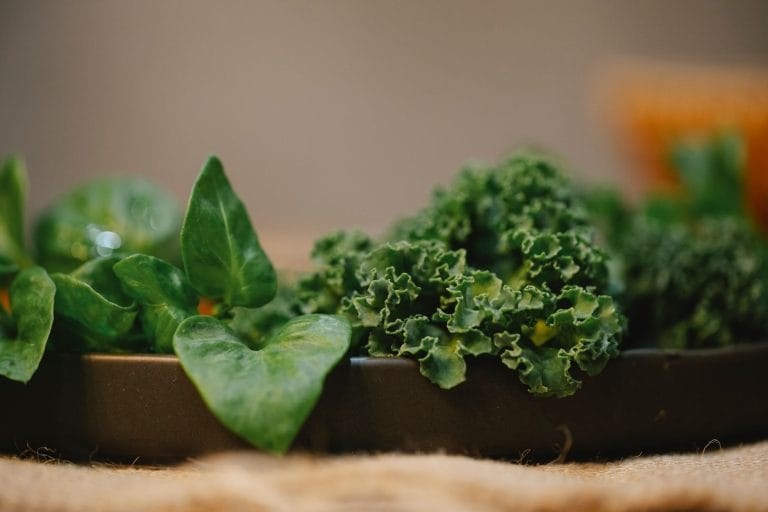
Two salad-bowl heavyweights, side by side, so you can pick the one your body actually needs.
Kale and spinach turn up in the same smoothies, the same salads, and the same “eat more greens” advice, which makes it easy to treat them as interchangeable. They aren’t, quite. Both are genuinely nutrient-dense and good for you, but they come from different plant families, taste different, and carry slightly different strengths and cautions.
If you’ve ever stood in the produce aisle wondering which bunch to grab, this comparison walks through where they overlap, where they part ways, and what to keep in mind before you eat either one raw.
Key Takeaways
– Kale and spinach are both low-calorie, nutrient-rich leafy greens that support digestion, heart health, and protection against oxidative damage.
– Kale wins on calcium, fiber, and vitamin C; spinach leads on vitamin K, vitamin A, magnesium, iron, and folate.
– Spinach is high in oxalates, which can raise kidney-stone risk, while kale carries more goitrin, which may affect the thyroid.
– Eating leafy greens raw carries a real risk of bacterial contamination, and cooking helps on several fronts.
Meet the Two Greens
Kale is part of the Brassica oleracea family, a close relative of wild cabbage, and is sometimes called leaf cabbage. Its leaves have a slightly bitter, peppery edge. A heads-up worth remembering: some kale varieties are ornamental only and not meant for eating.
Spinach comes from a completely different corner of the plant world. It belongs to the amaranth family and sits in the order Caryophyllales, which makes it a cousin of quinoa and beetroot. Native to western and central Asia, it has a mild, tender flavor and works equally well raw or cooked.
Nutrition Facts: How Kale and Spinach Stack Up
Both greens deliver a lot of nutrition for very few calories, and roughly 90 grams of every 100-gram serving is water. That’s part of why they feel so light on the plate.
The differences show up when you look closer at a 100-gram serving, per USDA data:
Kale leads on calcium, fiber, and vitamin C, carrying more than twice the calcium and fiber of spinach.
Spinach leads on vitamin K, vitamin A, magnesium, iron, and folate.
Both provide meaningful amounts of shared micronutrients, including vitamin A and riboflavin.
So neither is the clear “winner.” They cover overlapping ground with different emphases, which is a decent argument for rotating between them rather than picking a side for life.
The Health Benefits They Share
Because their nutrient profiles run parallel, kale and spinach offer many of the same payoffs.
Fiber and Digestion
Kale carries about double the dietary fiber of spinach, and fiber does a lot of quiet work. It keeps digestion moving and bowel habits regular, and higher fiber intake is linked to lower risk of obesity, diabetes, and cardiovascular and gastrointestinal disease. Most people don’t get enough of it, so either green helps close that gap.
Antioxidants
Both are loaded with antioxidants: beta-carotene, lutein, and vitamins A, C, and K. These compounds mop up free radicals, limit oxidative damage, and are associated with lower risk of chronic conditions such as diabetes, cancer, and heart disease.
Heart Health
 Save
Adding these greens to your meals may chip away at several cardiovascular risk factors. In one 12-week study of men with high cholesterol, drinking kale juice alongside meals was linked to improved cholesterol readings. Spinach, meanwhile, contains dietary nitrates that were found to improve both systolic and diastolic blood pressure. Two flavonoids present in both plants, quercetin and kaempferol, have also been shown to help lower elevated blood pressure.
A Possible Role Against Cancer
Both greens contain bioactive compounds with promising cancer-fighting properties in research settings. Some of these compounds appear to slow the growth and spread of cancer cells and may improve how certain treatments work. This area is still being studied, so think of it as a plus rather than a promise.
Weight Management
High water content, plenty of nutrients, and very little fat or calories make kale and spinach useful allies if you’re trying to lose weight. They fill space on the plate and add bulk to meals without adding much to the calorie count.
Folate for Pregnancy
 Save
Here’s a real point of difference. Spinach holds more than twice the folate of kale, which matters during pregnancy. Folate (the natural form of folic acid) helps prevent neural tube defects such as spina bifida in a developing fetus. Women who are of reproductive age or planning to conceive are generally advised to take 0.4 to 1.0 mg of folic acid daily as a supplement, with folate-rich foods rounding out the picture.
Support for Your Bones
 Save
Calcium and vitamin K both matter for bone strength, and between them these greens cover both. Kale offers more than twice the calcium of spinach, while spinach carries more vitamin K. Getting enough of each helps maintain bone density and lowers the risk of osteoporosis over time.
One kale-loving blogger, Hannah Cutting Jones, has written candidly about the hassles of eating it, from washing to prep, yet keeps it in her diet anyway. As she put it, she plans to “keep eating kale, in spite of this bump in our otherwise fabulous friendship.”
The Risks Worth Knowing
Neither green is risk-free, and a couple of the cautions are specific to each one.
Kidney stones. Spinach is very high in oxalate, a compound that binds calcium and blocks its absorption. Eating a lot of oxalate-rich food can encourage calcium oxalate kidney stones, so anyone prone to them should go easy on spinach. Boiling helps a great deal, cutting oxalate content by up to 87 percent.
Bacterial contamination. Raw leafy greens can carry foodborne illness. A large 2006 E. coli outbreak traced 80 percent of its cases to spinach, and a 2013 analysis found 6.6 percent of farmed spinach samples testing positive for the bacteria. Kale isn’t immune either, picking up E. coli and salmonella through poor growing or handling. Washing thoroughly is essential.
Thyroid balance. Kale and other cruciferous vegetables contain goitrin, which can lower iodine levels and interfere with thyroid hormone production. Spinach contains some goitrin too, but usually less than kale. Cooking reduces the effect.
Getting Them Ready to Eat
 Save
How you prepare these greens changes both their safety and their nutrition. Steaming or boiling brings down oxalate and goitrin levels, which is especially helpful for anyone managing kidney or thyroid concerns. Cooking can also improve the bioavailability of certain nutrients while lowering the odds of an adverse reaction.
That said, both greens can absolutely be eaten raw if you wash them well. Spinach’s mild flavor makes it an easy raw addition to salads and smoothies, while kale’s tougher, more bitter leaves often soften with a quick massage, a squeeze of lemon, or a short cook.
Frequently Asked Questions
Can I eat kale and spinach every day?
For most people, yes, in reasonable amounts as part of a varied diet. If you’re prone to kidney stones or have a thyroid condition, talk with your doctor about how much and how to prepare it, and lean on cooking to reduce oxalate and goitrin.
Is it better to eat these greens raw or cooked?
Both work. Raw keeps heat-sensitive vitamins intact, while cooking lowers oxalate and goitrin and can make some nutrients easier to absorb. Rotating between raw and cooked is a sensible middle ground.
Which one is better for pregnancy?
Spinach edges ahead here because of its higher folate content, which supports healthy fetal development. It shouldn’t replace a prescribed folic acid supplement, though, since supplements provide a reliable, measured dose.
The Bottom Line
Kale and spinach are both excellent additions to a healthy diet, and choosing between them comes down to what you need. Reach for kale when you want more calcium, fiber, and vitamin C, and for spinach when folate, iron, magnesium, and vitamin K are the priority. Mind the oxalates in spinach and the goitrin in kale, wash everything well, and cook when it makes sense. For most people, the benefits of these greens comfortably outweigh their risks.
This article is for general informational purposes only and is not a substitute for professional medical advice. Consult a qualified healthcare provider before making significant changes to your diet, especially if you are pregnant, have a thyroid condition, or are prone to kidney stones.