
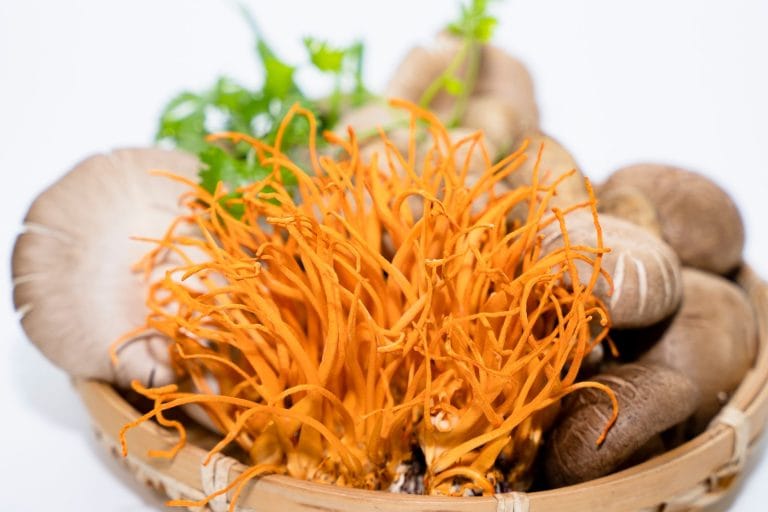
A closer look at the parasitic mushroom that traditional healers have prized for centuries — and what modern research actually says.
Cordyceps is a curious little fungus with an unusual life story: it grows as a parasite on insect larvae, sprouting from its host before being harvested and dried for use. Those dried remains have been folded into traditional medicine for generations, and today they turn up in capsules, powders, and wellness blends. What makes cordyceps interesting isn’t the backstory, though — it’s the antioxidants, polysaccharides, and other bioactive compounds packed inside, which researchers have linked to everything from steadier stamina to a calmer inflammatory response.
Below, we walk through the different types of cordyceps, the health benefits worth knowing about, how to take it, and the side effects to keep on your radar.
Key Takeaways
– Cordyceps may improve the body’s oxygen use during exercise, supporting endurance and reduced fatigue.
– Early research suggests it could help slow the growth of cancer cells, ease inflammation, and support heart, kidney, and liver health.
– It comes in convenient forms — capsules, tablets, powders, and dried mushrooms.
– Most people tolerate it well, but some experience diarrhea, nausea, or dry mouth.
– Much of the promising evidence comes from animal and lab studies, so human data is still catching up.
The Many Faces of Cordyceps
More than 600 species of cordyceps have been catalogued, but only a handful are edible or commonly used. A few you’re likely to encounter:
Cordyceps militaris — cultivated on grains like rice and a staple of traditional Chinese medicine.
Cordyceps sinensis — the famous “caterpillar fungus” that grows on ghost moth larvae in Nepal and China, long treasured for its medicinal reputation.
Cordyceps cicadae — grown on cicadas, with a crunchy bite and mild sweetness, favored for immune support.
Cordyceps ophioglossoides — bitter in taste and traditionally used to relieve fatigue and respiratory complaints.
Fueling Better Exercise Performance
 Save
SaveIf cordyceps is known for one thing, it’s stamina. The polysaccharides inside it carry anti-fatigue properties, and researchers believe part of the mushroom‘s edge comes from how it supports the body’s energy machinery. Cordyceps appears to boost the production of ATP — the molecule your cells burn for fuel — while improving how efficiently your body takes in and uses oxygen during activity.
A study from the University of North Carolina found that a single dose could improve tolerance to high-intensity exercise, with even greater gains from taking it consistently over time. Other work has shown improvements in oxygen uptake (VO2) and resistance to fatigue in older adults, and a University of California trial reported that cordyceps capsules taken three times daily for 12 weeks lifted exercise performance and general wellness.
May Help Reduce Cancer Risk
Some of the most studied compounds in cordyceps are its anti-cancer agents. Cordycepin — the first drug isolated from Cordyceps militaris — has shown an ability to slow the spread of cancer cells and suppress tumor growth through several biological pathways. Polysaccharides and other bioactive molecules add to this effect. In lab studies, a methanolic extract of C. militaris inhibited the growth of various tumor cells, while ethanol extracts showed cytotoxic activity against colon and liver cancer cells. These are early, mostly lab-based findings, but they help explain the mushroom’s longstanding reputation.
May Slow the Signs of Aging
 Save
SaveThe same antioxidant polysaccharides that fight fatigue may also help temper premature aging by curbing oxidative stress. A review in the International Journal of Molecular Medicine noted that a Cordyceps sinensis oral liquid extended the lifespan of fruit flies, and other research found C. sinensis reversed age-related shifts in gene expression and prolonged the lifespan of mice. Whether these effects translate to humans is still an open question.
May Support Heart Health
 Save
SaveCordycepin has lipid-lowering effects, and in China cordyceps has been approved to treat arrhythmia (irregular heartbeat). In animal models, C. sinensis helped protect against heart injury linked to chronic kidney disease, while mycelia extracts showed cardioprotective and antioxidant activity, helping reduce heart muscle contracture. A study in hamsters also found cordycepin could help prevent hyperlipidemia. As with much of the research here, larger human trials are needed.
May Help Calm Inflammation and Manage Diabetes
Cordyceps militaris has a place in Chinese medicine for treating lung and bronchial inflammation, and in one study it reduced airway inflammation in asthmatic mice. Methanol extracts of Cordyceps pruinosa suppressed inflammation-driving genes, and a strain called Paecilomyces hepiali showed similar anti-inflammatory action.
On the metabolic front, research from Chang-Jung Christian University in Taiwan suggested the fruiting body of cordyceps could act as a functional food for people with diabetes, and a blend of fruiting-body and mycelia powders appeared to protect the kidneys in diabetic nephropathy.
Where Evidence Is Still Thin
A few benefits get talked about but rest on limited data. Cordyceps has been linked to a higher sex drive, with Ophiocordyceps sinensis shown to raise sperm count, motility, and testosterone in some studies. It may also support kidney function as an add-on therapy for chronic kidney disease, and cultured C. sinensis mycelia have hinted at benefits for liver health. These are promising leads rather than settled conclusions.
How to Choose Cordyceps Supplements
 Save
SaveCordyceps is easy to work into a routine. You’ll find it as capsules, tablets, and powders, plus whole dried mushrooms sold online. Dried cordyceps is often used to make extracts, while the powder blends nicely into tea, smoothies, or protein shakes. When shopping, look for an NSF or USP seal on the label and choose a yeast-free product.
As for dosage, there’s no official recommendation, since most studies have been done in animals. Anecdotal reports suggest 1 to 3 grams per day is safe for most people, but check with a healthcare provider before starting. Cordyceps is generally considered non-toxic, though some people notice diarrhea, nausea, or dry mouth.
Frequently Asked Questions
Is cordyceps safe to take every day?
For most healthy adults, daily use in the 1–3 gram range is generally considered safe and side-effect-free. Because formal dosage guidelines don’t exist, it’s smart to start low and confirm with your doctor, especially if you take medications.
What’s the difference between Cordyceps militaris and Cordyceps sinensis?
C. militaris is cultivated on grains and is widely available and affordable. C. sinensis, the wild “caterpillar fungus,” grows on moth larvae and is rarer and pricier, which is why many supplements use militaris or lab-cultured mycelia.
Can cordyceps really improve my workouts?
Several studies point to better oxygen use, higher ATP production, and improved fatigue resistance, with the strongest results coming from consistent use over weeks. It’s a supportive tool, not a substitute for training and recovery.
The Bottom Line
Cordyceps is a fascinating fungus with a long medicinal history and a growing base of research to match. The most encouraging evidence surrounds exercise performance and oxygen use, while its potential roles in cancer prevention, heart health, inflammation, and blood-sugar management are promising but still lean heavily on animal and lab studies. If you’re curious, a quality-verified supplement taken in modest amounts is a reasonable place to start — just loop in your healthcare provider first, particularly if you have a medical condition or take other medications.
dried cordyceps militaris mushroom on wooden spoon.
This article is for informational purposes only and is not a substitute for professional medical advice. Always consult a qualified healthcare provider before starting any new supplement, especially if you are pregnant, nursing, managing a health condition, or taking medication.