

A pale, sweet melon that’s mostly water and quietly full of useful nutrients.
Honeydew (Cucumis melo) is the smooth, pale cousin in the melon family. It’s oval, has a light rind, and hides a soft green center with a gentle floral sweetness. At roughly 36 calories per 100 grams, it lands squarely in the “eat freely” category, and most of what it offers comes from its water, fiber, potassium, and plant pigments called carotenoids.
None of this makes it a miracle food, and I’ll flag where the research is still thin. But as a low-sodium, high-water snack, it earns its spot in the fruit bowl.
Key Takeaways
– Honeydew is about 90% water, which makes it a genuinely good fruit for hydration.
– It’s low in sodium and decent in potassium, a combination linked to healthier blood pressure.
– Carotenoids like lutein and zeaxanthin support eye health and help block damaging free radicals.
– Vitamin C in the fruit feeds collagen production and skin defense against sun damage.
– Eating a lot at once can loosen your stomach and nudge blood sugar up, so moderation matters.
What Honeydew Actually Tastes Like
A ripe honeydew is sweet, juicy, and soft without turning to mush. The flavor is subtle and a little floral rather than punchy. Ripeness makes or breaks it: an underripe melon tastes bland and crunchy with a musky aftertaste that fades as the fruit matures. One YouTube reviewer, tasting it for the first time, called it “nature’s candy” and compared the sticky-sweet juice to a good mango. That’s a fair description when you catch one at its peak.
A Look at the Nutrition
Per the U.S. Department of Agriculture, 100 grams of raw honeydew gives you roughly:
Calories: 36
Carbohydrate: 9.1 g (8.1 g of it sugar)
Fiber: 0.8 g
Potassium: 228 mg
Sodium: 18 mg
Vitamin C: 18 mg
Folate: 19 µg
Magnesium: 10 mg
Protein and fat are both negligible. The standout numbers are the low sodium against the higher potassium, plus a useful hit of vitamin C. Honeydew also carries carotenoids and polyphenols, the plant compounds that do a lot of the quiet work behind its benefits.
What Honeydew May Do for Your Health
Blood pressure and hydration
 Save
SaveThis is where honeydew is on its firmest footing. The fruit is low in sodium and higher in potassium, and that ratio is the one nutrition researchers keep tying to steadier blood pressure. A review in Plants points to the high water and mineral content of melons as helpful for lowering blood pressure, and broader work shows that eating plenty of fruits and vegetables tracks with a lower risk of hypertension.
Hydration is the other half of the story. You get dehydrated when you lose more fluid than you take in, and a fruit that’s around 90% water helps close that gap. The potassium plays a second role here too, supporting the electrolyte balance your body relies on to hold onto that water.
Eyes and heart
Honeydew is a source of lutein and zeaxanthin, two carotenoids that concentrate in the eye. Lutein in particular is linked to better visual performance and a lower risk of age-related macular degeneration, a leading cause of vision loss later in life. These pigments act something like internal blue-light filters, cutting the free-radical damage that light exposure can cause.
For the heart, the carotenoids and polyphenols bring antioxidant and anti-inflammatory activity that’s been associated with lower cholesterol and blood pressure and a reduced burden of cardiovascular disease. The folate in the melon has its own line of research tying it to protection against stroke.
Skin
 Save
SaveVitamin C is the reason honeydew shows up in “good for your skin” lists. It’s a building block for collagen and a genuine antioxidant, which is why it’s studied for guarding skin against UV-driven photoaging and for softening hyperpigmentation. Worth a caveat: most of that evidence comes from vitamin C itself, not from honeydew specifically, so treat the fruit as one small contributor rather than a treatment.
Where the Evidence Is Still Thin
A few claims get attached to honeydew that the research hasn’t fully earned yet.
Bone health. The melon carries magnesium and some B vitamins that matter for bone density, but that’s a nutrient argument, not a study on honeydew and bones.
Immunity. Its vitamin C supports normal immune function and has a modest track record with colds, though you’d get that from many fruits.
Pregnancy. Lutein and zeaxanthin appear to play a role in fetal vision and brain development, and honeydew is a source of both, which makes it a reasonable snack during pregnancy. The direct evidence is still limited.
The carotenoids have also been studied for a possible role in reducing cancer risk, but that remains a broad association rather than anything you should count on.
Side Effects to Keep in Mind
In normal amounts, honeydew is safe for most people. Overdo it and the fruit sugars can trigger diarrhea or push blood sugar higher than you’d like, which is the main thing to watch if you’re managing glucose. A smaller number of people react to melon with mouth itching, hives, cramps, trouble breathing, or nausea, usually right after eating. If that happens, stop and check with your doctor.
Honeydew or Cantaloupe
 Save
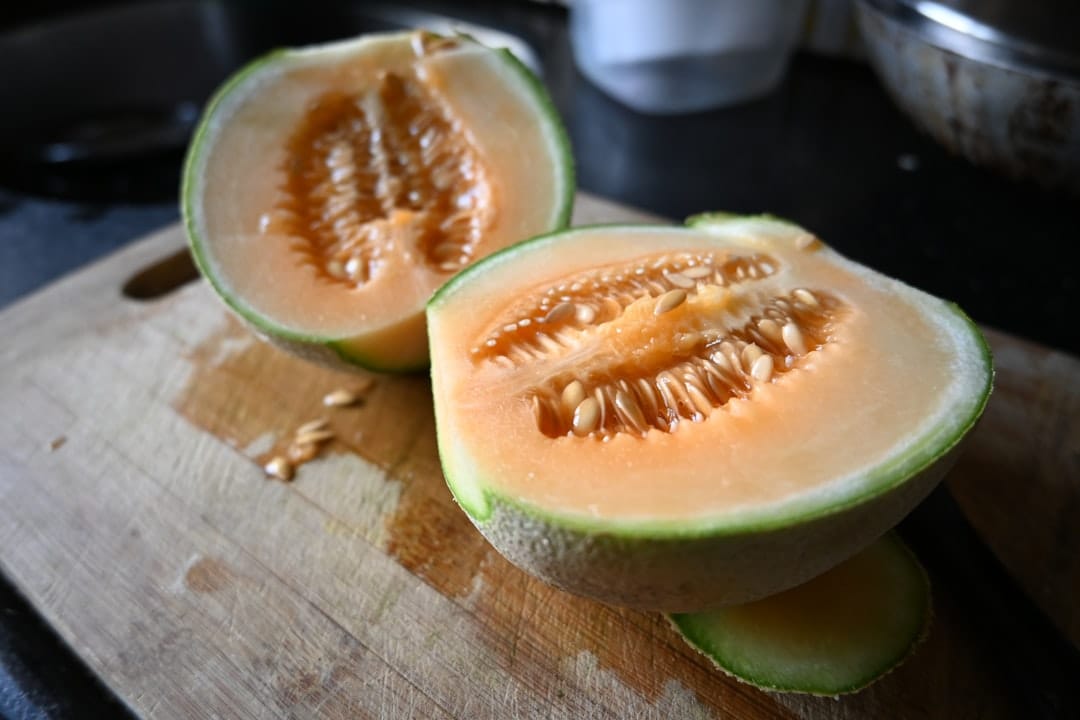
SaveThey’re close relatives with clear differences. Honeydew has a smooth, pale rind and green flesh; cantaloupe wears a netted tan rind over orange flesh. Honeydew is sweeter with firmer flesh, while cantaloupe runs softer. That netted rind also makes cantaloupe more prone to surface contamination, so rinse it well before cutting. Nutritionally, cantaloupe is the richer source of vitamins A and C, but both are worthwhile additions to a balanced plate.
How to Pick, Store, and Eat It
 Save
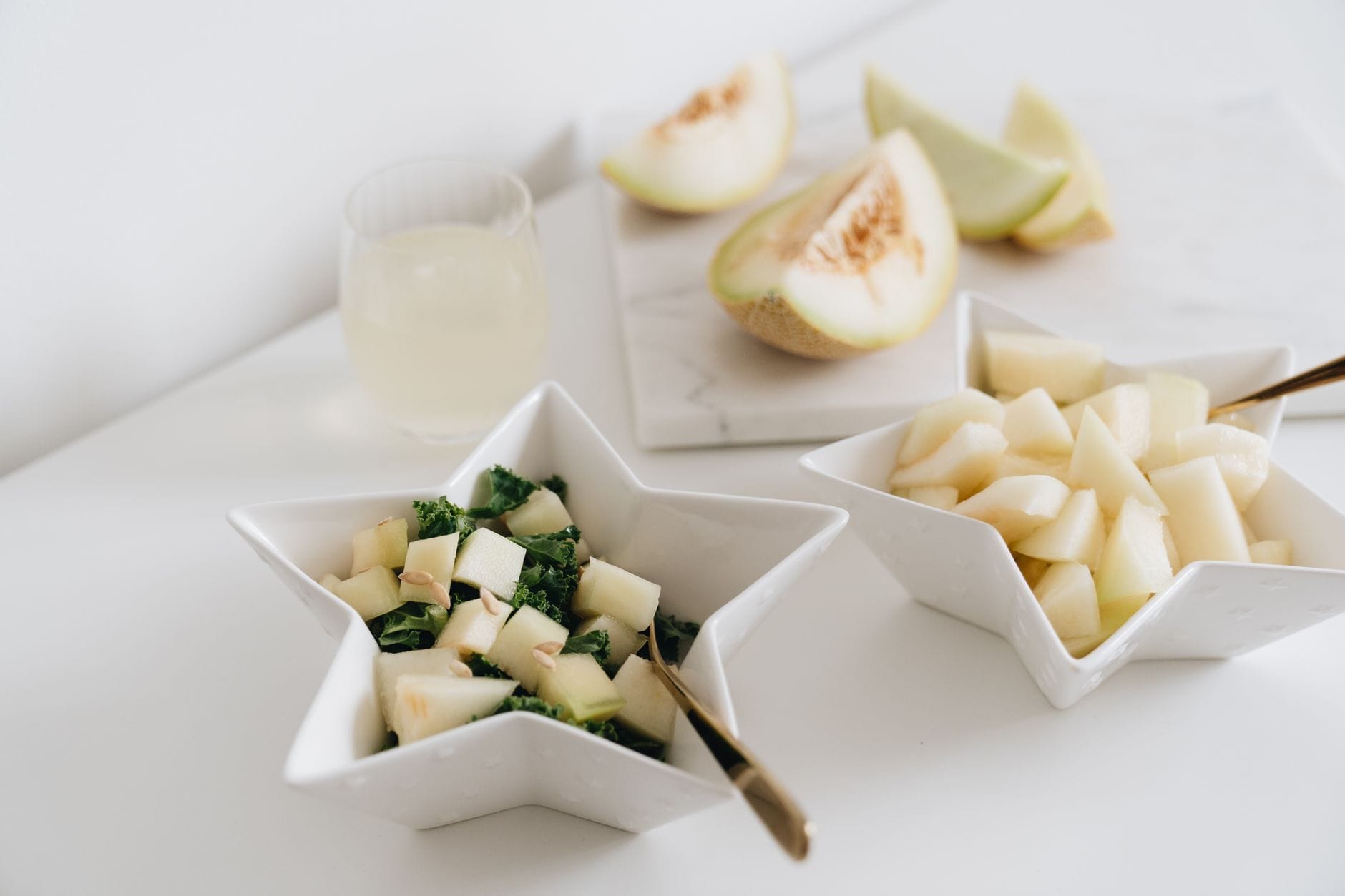
SaveChoose a melon that feels heavy for its size with a rind that’s turned from green to a creamy pale color and gives slightly at the blossom end. Keep a whole honeydew at room temperature to finish ripening, then move it to the fridge. Once cut, store the pieces in a sealed container and eat them within a few days.
The simplest way to enjoy it is cold and cubed on its own. Beyond that, it blends into smoothies, pairs surprisingly well with a squeeze of lime and a pinch of salt, tucks into a fruit salad, or gets wrapped in prosciutto for a sweet-and-salty starter.
Frequently Asked Questions
Is honeydew good for people watching their weight?
Yes. It’s low in calories and high in water, so it’s filling for very little energy. Just keep portions reasonable, since the sugars still add up.
Can I eat honeydew every day?
For most people, a serving a day is fine as part of a varied diet. If you have diabetes or blood sugar concerns, keep portions modest and account for the carbohydrates.
Which is healthier, honeydew or cantaloupe?
Cantaloupe edges ahead on vitamins A and C, but honeydew is a touch sweeter and lower in sodium. Neither is a wrong choice; rotating between them covers more ground.
The Bottom Line
Honeydew won’t transform your health on its own, and a few of its trendier claims are still waiting on stronger evidence. What it reliably offers is real: a hydrating, low-sodium, low-calorie fruit with potassium for blood pressure, carotenoids for your eyes and heart, and vitamin C for your skin. Pick a ripe one, keep your portions sensible, and let it be the easy, refreshing part of an already varied diet.
This article is for informational purposes only and is not a substitute for professional medical advice. Talk with your doctor or a registered dietitian before making significant changes to your diet, especially if you are pregnant, managing blood sugar, or have a known food allergy.