
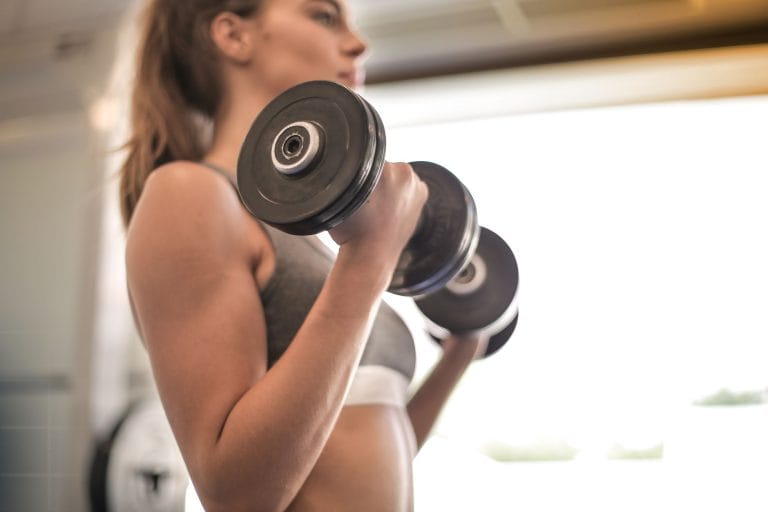
A simple, do-anywhere routine to sculpt lean muscle, strengthen your whole body, and rev up your metabolism.
Dumbbells are far more than a tool for building bigger arms. Used thoughtfully, a single pair can work nearly every muscle in your body, help you trade fat for lean muscle, and leave you feeling stronger and more capable in everyday life. Better still, dumbbell training suits complete beginners just as well as seasoned lifters.
Sports nutritionist Nilofer Pendhari notes that training with dumbbells is an excellent way to build lean mass while lowering body fat, and that these workouts keep your metabolism elevated for hours after you set the weights down. Pair that with a little cardio, and you have a genuinely efficient way to reshape your body at home or at the gym.
Key Takeaways
– A dumbbell routine is one of the most effective ways for women to build and tone muscle.
– All you need is a pair of dumbbells to work the legs, chest, back, arms, and core — anywhere.
– Moves can be adjusted to focus on the specific area you most want to develop.
– Starting light and progressing to heavier weights, with good form and consistency, delivers the best results.
– Strength training also supports bone health and can boost confidence and overall well-being.
What a Dumbbell Workout Actually Does for You
Dumbbell workouts use handheld weights to challenge your muscles against resistance. Because you can angle and position them so freely, one set of weights can target very different muscle groups — which makes them ideal for building all-over strength and improving balance.
For women specifically, these workouts tone the arms, legs, and core while supporting fat loss and keeping your metabolism humming. Research also links dumbbell and resistance exercises to greater muscle activation, so you get real work out of every rep.
Why Women Should Not Fear Heavier Weights
 Save
SaveMany women reach for the lightest dumbbells on the rack, worried that heavier loads will make them look bulky or “manly.” The evidence tells a different story. Strength training with challenging weights helps women protect bone density and lower the risk of osteoporosis, increase lean body mass, reduce body fat, and improve overall well-being. There is a mental payoff too — lifting heavier has been shown to boost feelings of strength, power, and self-confidence. In short, don’t be afraid to progress.
A Beginner’s Guide to Getting Started
 Save
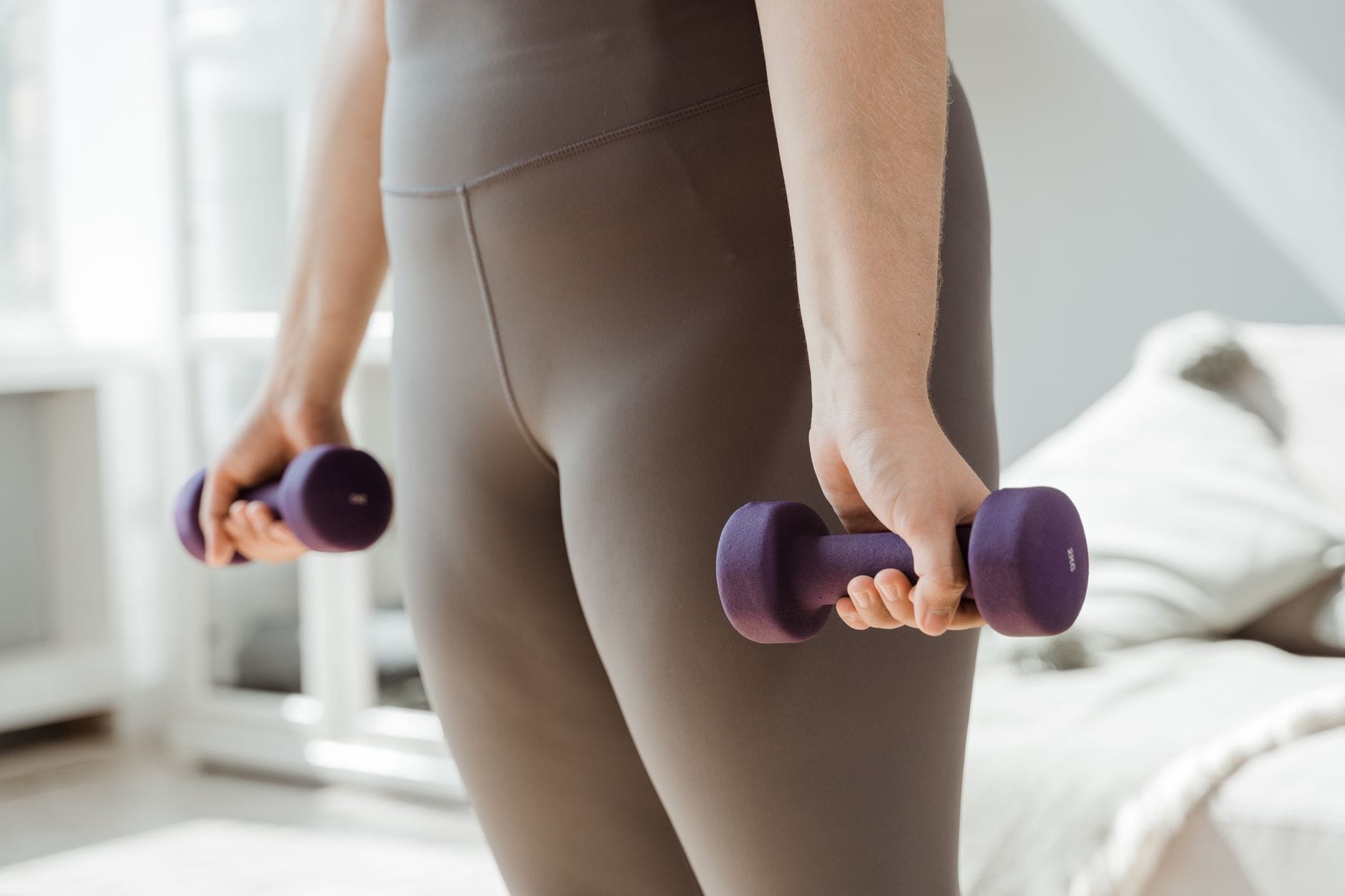
SaveIf you’re new to lifting, a few simple habits will keep you safe and set you up for steady progress:
Start light. Begin with weights you can control to avoid injury and build confidence.
Prioritize form. Good technique ensures you’re working the intended muscles, not straining others.
Progress gradually. Add weight only as your strength improves.
Keep it simple at first. Basics like bicep curls, squats, and shoulder presses build a solid foundation.
Warm up. Prepare your muscles before you load them.
Rest. Schedule recovery days so muscles can repair and grow.
Move Through the 16 Exercises
 Save
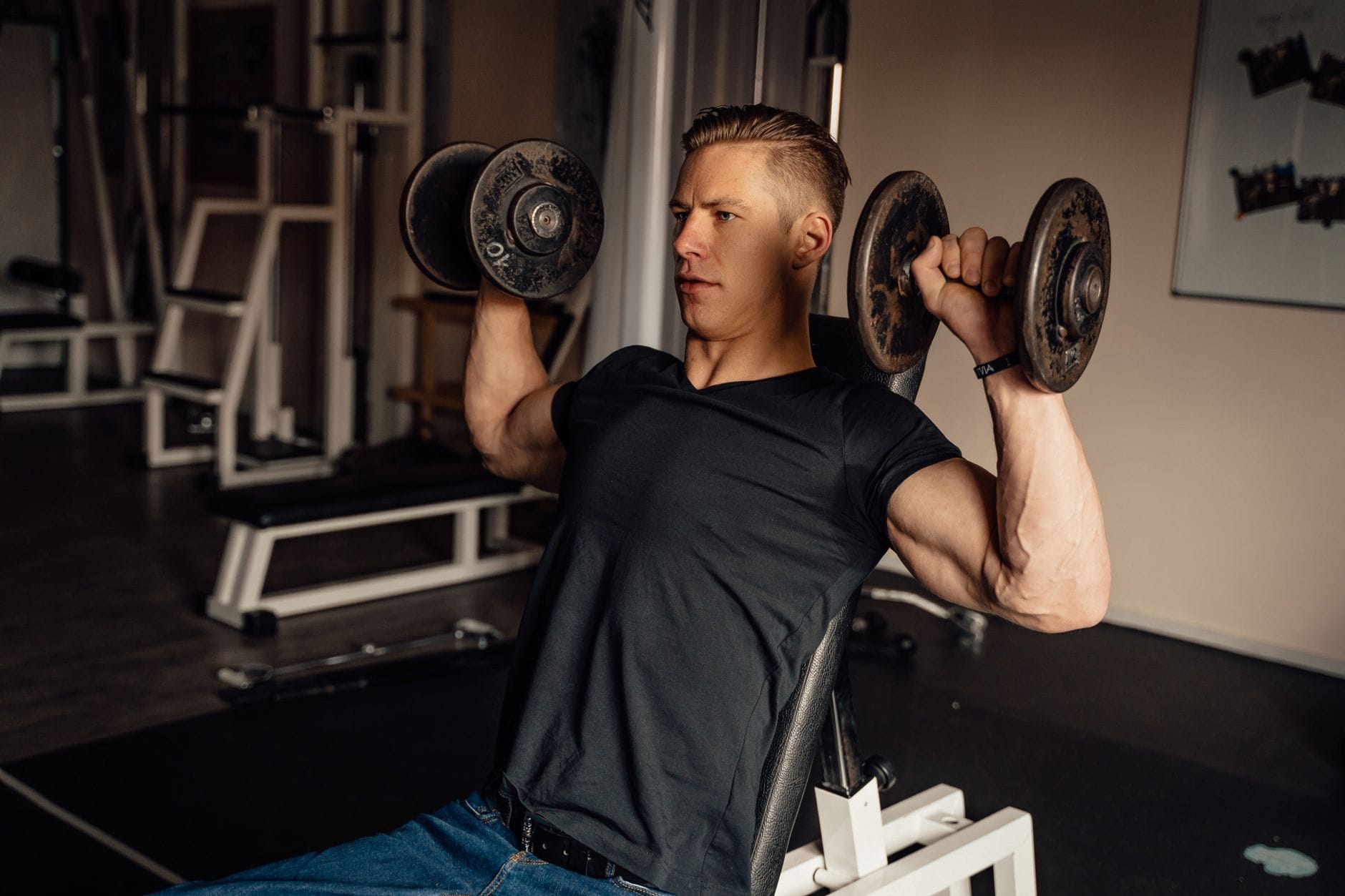
SaveThese full-body moves hit every major muscle group. Grab your dumbbells and work through them with control.
Shoulders and Upper Body
1. Front Raise — Holding a light dumbbell in each hand, palms facing your thighs, core tight, raise both arms straight in front to shoulder height, then lower. 3 sets of 8–12 reps. Targets deltoids and upper chest.
2. Lateral Raise — From arms-by-your-side, lift the weights out to the sides up to shoulder level and lower. 3 sets of 8–12 reps. Targets deltoids and upper back.
3. Tricep Extension — Kneeling, hold one dumbbell overhead with both hands. Bend the elbows to lower it behind your head, then press back up. 3 sets of 8–12 reps. Targets triceps and shoulders.
4. Bicep Curl to Press — Curl the weights up, rotate your wrists outward, then press overhead; reverse to return. 3 sets of 8 reps. Targets biceps, shoulders, and triceps.
5. Hammer Curl Press — With palms facing in, curl up and press overhead, pause, then lower under control. 3 sets of 8 reps. Targets biceps, shoulders, and triceps.
Chest, Back, and Core
1. Glute Bridge Chest Press — Lying with knees bent and hips lifted, press the dumbbells above your chest and lower. 3 sets of 8 reps. Targets chest, glutes, and core.
2. Bent Over Flys — Hinge forward from the waist, arms hanging, then raise them out to the sides. 3 sets of 8–10 reps. Targets upper back and rear deltoids. Skip this if you have lower back pain.
3. Renegade Row — In a plank with a dumbbell in each hand, row one weight to your ribs, lower, and alternate. 3 sets of 8 reps. Targets lats, shoulders, core, and arms.
4. Full Body Crunch — Lying flat, hold a dumbbell overhead and crunch up as you draw your knees in. Targets the core.
Continue building your routine by adding lower-body staples like weighted squats and lunges to round out a true full-body session. Keep your core engaged throughout every move to protect your lower back and get the most from each rep.
How to Structure Your Week
 Save
SaveAim to spread these moves across two to three sessions a week, leaving rest days in between. A study of more than 116,000 people found that those who exercised well beyond the minimum recommendations saw a meaningfully lower risk of death — a 26% to 31% drop in all-cause mortality and up to a 38% reduction in cardiovascular mortality. That’s a powerful reminder that consistency, not intensity alone, is what pays off over time.
Combine full-body dumbbell circuits with a few minutes of cardio to encourage fat loss while you build lean muscle. Track your reps and weights so you know when it’s time to nudge the load a little heavier.
Frequently Asked Questions
Will lifting dumbbells make me bulky?
No. Toning and building visible muscle mass the way many people fear takes very deliberate, high-volume training. For most women, dumbbell workouts create a lean, defined look while burning fat and strengthening bone.
How heavy should my dumbbells be?
Start with a weight you can move with clean form for all your reps, with the last couple feeling challenging. As those reps get easier, step up to a heavier pair. Progression is what keeps results coming.
How often should I do a dumbbell workout?
Two to three full-body sessions per week is a great starting point, with rest days in between so muscles can recover and grow. Add light cardio on other days if you’d like.
The Bottom Line
A pair of dumbbells is one of the most versatile — and underrated — tools for women who want to feel and look stronger. By working every major muscle group, progressing your weights over time, and staying consistent, you can tone your arms, legs, and core while boosting your metabolism and protecting your long-term health. Ditch the fear of heavier weights, focus on form, and let the results build session by session.
This article is for informational purposes only and is not a substitute for professional medical advice. Consult a qualified healthcare provider or certified trainer before beginning any new exercise program, especially if you have an existing injury or health condition.