

A twisted ankle is common, painful, and very fixable once you know the right moves.
You do not have to be mid-game to roll an ankle. Plenty of sprains happen in ordinary moments: a wobble in high heels, a missed step off a curb, a bad landing coming down the stairs. Whatever caused yours, the good news is that a sprained ankle usually responds well to a few simple, well-studied steps you can start at home today.
Let me be honest about one thing up front. You cannot fully heal a sprain overnight, no matter what a headline promises. What you can do overnight is protect the joint, calm the swelling, and set yourself up for a much faster, smoother recovery. That is what the steps below are built to do.
Key Takeaways
– A sprain happens when the ligaments holding your ankle get stretched past their normal limit, sometimes tearing.
– Stay off the injured ankle in the early days; walking on it too soon slows healing.
– The RICE or PRICE method (rest, ice, compression, elevation, plus protection) is the go-to first response.
– Cold eases pain and swelling in the first 48 hours; save heat for after that window.
– Severe swelling, an inability to bear weight, or lingering instability all warrant a doctor’s visit.
What a Sprained Ankle Actually Is
Your ankle is held together by ligaments, the tough fibrous bands that connect bone to bone. A sprain is what happens when those bands get pulled beyond their comfortable range, often when the foot rolls inward or outward or lands awkwardly during a walk, run, or jump.
A roll inward is called an eversion sprain, while a roll outward is called an inversion sprain. Mild versions cause tiny microscopic tears in the ligament fibers. More forceful twists can tear the ligaments and tendons in a bigger way, and in some cases the injury comes with a fracture in the ankle bone.
It is a widespread problem. In one review of 909 patients, sprains were split almost evenly between men and women, and the causes were telling: roughly 29% came from tripping, about a quarter from sports (football topped that list), and the rest from walking or various accidents. In other words, this is an everyday injury, not just an athlete’s problem.
Symptoms to Watch For
The signs of a sprain scale with its severity, so a mild tweak feels very different from a serious tear. Common symptoms include:
Pain and tenderness when you touch the area
Swelling and bruising
Skin discoloration
Stiffness and difficulty walking
Trouble putting any weight on the foot
A popping sensation at the moment of injury
A wobbly, unstable feeling in the joint
Paying attention early pays off. Severe swelling or a complete inability to stand on the ankle can point to something more serious that needs prompt medical care, so listen to your body rather than pushing through.
Grading the Sprain
Doctors sort ankle sprains into three grades based on how badly the ligament is damaged:
Grade 1 (mild) — the fibers stretch a little, with minor swelling and tenderness.
Grade 2 (moderate) — the ligament is partially torn, bringing more swelling and pain.
Grade 3 (severe) — the ligament ruptures completely, with intense pain and heavy bruising.
Knowing roughly which grade you are dealing with helps you judge how cautious to be and whether professional care is worth seeking sooner rather than later.
How Doctors Diagnose It
 Save
If you see a clinician, expect a hands-on exam first. They will check your range of motion, note where it hurts, and gauge the swelling to estimate severity. Stability tests like the talar tilt and the anterior drawer test let them feel how much give the ligaments have. When the picture is unclear or the injury looks severe, imaging such as an X-ray or MRI may be ordered to rule out a fracture or a full tear.
The First 72 Hours Matter Most
The most reliable early treatment has a tidy acronym: PRICE, standing for Protection, Rest, Ice, Compression, and Elevation. Drop the protection step and you get the older RICE. Either way, the first three days are about giving the joint quiet and support.
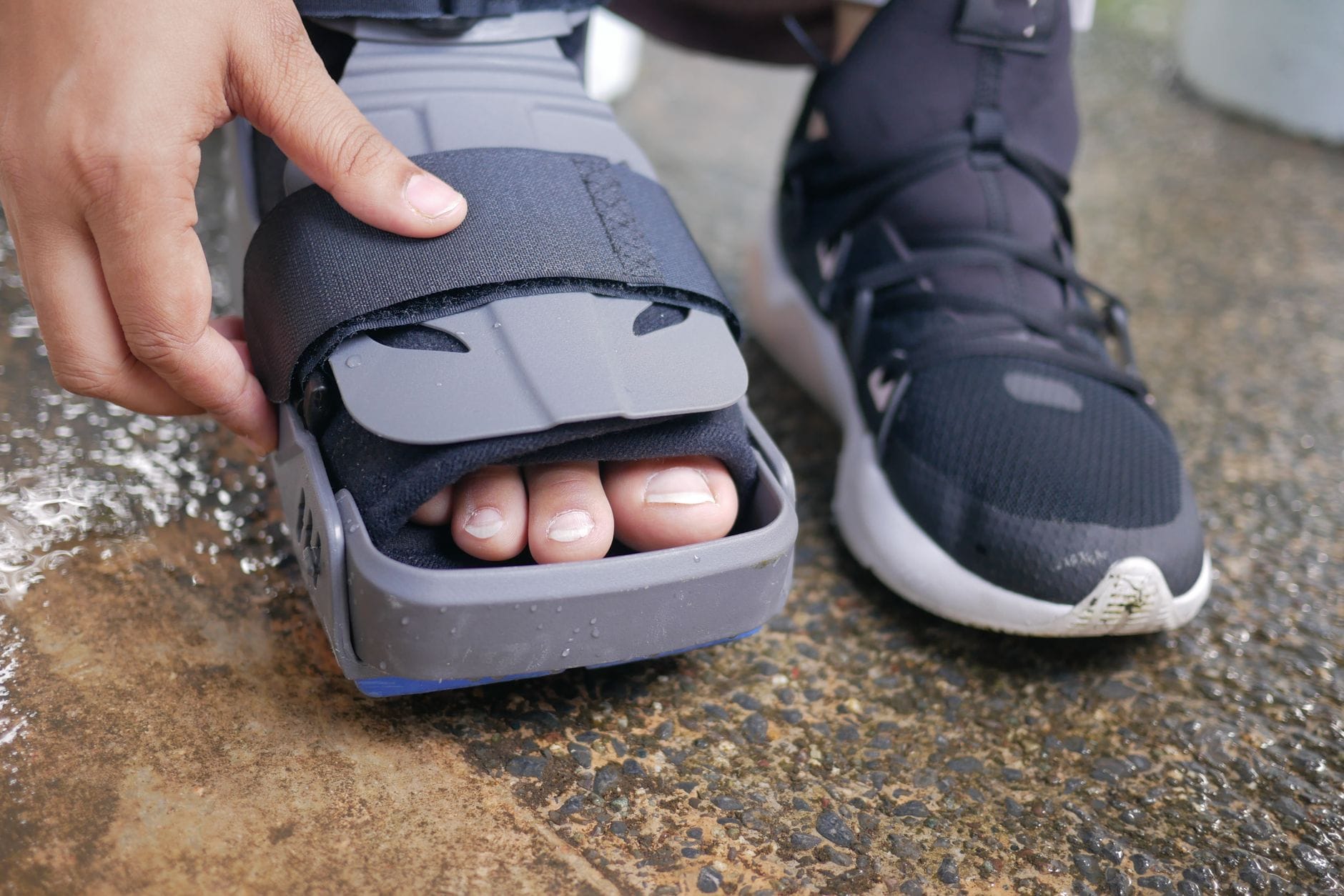
Rest is non-negotiable at the start. Keep the ankle compressed and stable with an elastic bandage or a brace, and prop the foot up whenever you can. Elevation lets gravity help drain the fluid that causes swelling.
Wrapping the Ankle
 Save
A snug wrap makes a real difference. Here is a simple approach:
1. Start with a 6-inch elastic (ACE) bandage.
2. Wrap once around the base of your toes, firm but not so tight that it numbs the foot.
3. Work back toward the ankle in a figure-8 pattern.
4. Keep going until the joint feels well supported.
5. Fasten the end with the clips or a safety pin.
A layer of kinesiology (KT) tape underneath can add a bit more support to the ligaments if you have it on hand.
Ice, Heat, or Both
 Save
Cold therapy is your friend in the beginning. An ice pack, or a towel soaked in ice water, lowers the temperature of the injured tissue and slows its metabolism, which helps quiet pain, swelling, and muscle spasms. Always wrap ice in a cloth rather than laying it straight on the skin. If ice is not available, topical peppermint, menthol, or camphor oils can offer a little relief from swelling.
Heat has its place too, just not yet. Warmth loosens tight, stiff muscles and can ease pain and spasms, but applying it during the first 48 hours is a mistake because the area is already inflamed. Once past that window, some people alternate the two: 20 minutes of heat, then 20 minutes of cold, switching back and forth.
A Word on Pain Relief
Over-the-counter pain relievers can take the edge off in the early days so you can rest more comfortably. Use them as directed, and treat them as a bridge while the ligament heals rather than a reason to start using the ankle again too soon.
Recovery and Getting Back to Normal
 Save
Patience is the quiet hero here. A mild sprain tends to settle relatively quickly, while a severe one can take considerably longer and sometimes needs physical therapy to rebuild strength and balance. Rushing back onto an unstable ankle is the fastest way to re-injure it, so ease into weight-bearing and let comfort, not the calendar, guide you.
To lower your odds of a repeat, work on ankle strength and flexibility once you have healed, wear supportive shoes, and warm up before activity.
When Should You See a Doctor?
Call a professional if you cannot bear any weight, if swelling and bruising are severe, if you heard a loud pop and the joint feels loose, or if pain and instability are not improving after a few days of home care. These can signal a serious tear or a fracture that needs proper treatment.
Frequently Asked Questions
Can I really heal a sprained ankle overnight?
Not completely. Ligaments take days to weeks to knit back together depending on the grade. What you can do in a single night is protect, ice, compress, and elevate the joint, which meaningfully shortens the overall recovery.
Should I walk on a sprained ankle?
Avoid it in the early days. Resting the joint and keeping weight off it gives the ligament a chance to heal. Reintroduce walking gradually once the pain and swelling ease.
Is ice or heat better for a fresh sprain?
Ice first. For the initial 48 hours, cold controls pain and swelling. Heat is better saved for later, when you are dealing with lingering stiffness rather than active inflammation.
The Bottom Line
A sprained ankle is one of those injuries that looks alarming and heals reliably when you treat it well. Protect and rest the joint, lean on ice and compression in the first two days, keep the foot elevated, and give it real time before you load it again. Do that, and most sprains fade without drama. Save the doctor’s visit for the warning signs: no weight-bearing, severe swelling, or an ankle that stays unstable. Your future self, and your ankle, will thank you for not rushing.
This article is for informational purposes only and is not a substitute for professional medical advice. Always consult a qualified healthcare provider for diagnosis and treatment of any injury.