
A mild, creamy summer vegetable that slips into almost any dish while quietly delivering fiber and vitamins.
If you’ve ever picked up what you thought was a yellow zucchini, there’s a good chance it was actually yellow squash. The two are close relatives, similar in taste and texture, and easy to mix up. Yellow squash gets less attention than its green cousin, but it holds its own on nutrition, and its thin, edible skin and soft seeds make it one of the more forgiving vegetables to cook with.
It belongs to the summer squash family, grown from the plant Cucurbita pepo. Unlike winter squash with its tough shell and scoop-out seeds, this one is edible from skin to center. You’ll usually find it in two shapes: straightneck, which tapers like a club from a thicker base, and crookneck, which has a slim, slightly bent neck over a rounded bottom. The shape differs, but the nutrition is essentially the same either way.
Key Takeaways
– Yellow squash is fat-free, low in calories, and high in fiber, which helps it fill you up and supports weight management.
– A single cup covers a meaningful share of your daily vitamin C, vitamin K, and vitamin A.
– Compounds called cucurbitacins give it anti-inflammatory potential that researchers continue to study.
– Its folate and choline content matters during pregnancy for healthy fetal development.
– The flavor is mild and creamy, so it blends easily into stir-fries, roasts, purees, and even pasta stand-ins.
What’s Actually in a Cup
Yellow squash works whether you eat it raw or cooked. According to USDA data, one cup of raw yellow squash carries about 36 calories, roughly 1 gram of protein, less than a gram of fat, and around 7 grams of carbohydrate. It has no cholesterol, and most of those modest calories come from carbs.
That thin profile is exactly why it earns a place in so many meals. You get bulk, water, and fiber without much energy density, which leaves plenty of room for the good stuff. The same cup delivers close to 19% of your daily vitamin C, about 22% of your vitamin K, and roughly 11% of the recommended vitamin A.
Health Perks Worth Knowing
 Save
A friend to weight goals
 Save
Because it’s naturally low in fat and calories yet high in fiber, yellow squash tends to satisfy hunger faster than heavier vegetables. Swapping in squash for starchier options like corn or potatoes trims calories without shrinking the size of your plate. You’re not sacrificing volume, just cutting the load.
Easier digestion
Fiber is the quiet workhorse here. It keeps things moving, helps regularize bowel movements, and can head off constipation and related gut complaints. One cup provides close to half the fiber many people need in a day. The high water content adds to the full feeling without the bloat that some foods bring.
An immune and vision boost
The vitamin C and vitamin K in yellow squash support immune defenses, tissue strength, and the proper working of muscles and blood vessels. Then there’s vitamin A, which the body draws partly from beta-carotene, the pigment behind that cheerful yellow color. Vitamin A helps the light receptors in your eyes do their job and keeps the eye’s mucous membranes strong against infection.
Anti-inflammatory compounds
Like other members of the gourd family, yellow squash contains cucurbitacins. Research points to their possible role in easing inflammation, discouraging cancer cell growth, and relieving pain tied to arthritis and similar conditions. This part is still an active area of study rather than a settled promise, so think of it as a bonus rather than a treatment.
Support during pregnancy
 Save
Folate and choline both play a part in a developing baby’s neural growth, and adequate intake is linked to lower risk of birth defects such as spina bifida and brain abnormalities. A cup of yellow squash chips in roughly 7.1 mg of choline and 19 µg of folate, a small but useful contribution to a broader prenatal diet.
Is It the Same as Zucchini?
Not quite, though they overlap a lot. Both are low in calories and rich in antioxidants, and you can often trade one for the other in a recipe. The differences are mostly cosmetic. Zucchini is usually long, slim, and uniform, and it shows up most often in green (a yellow zucchini exists too). Yellow squash comes in one color and tends to be broader at the base with a shorter, straight or curved neck.
Cooking them together is a nice trick when you want some color contrast, whether you’re grilling vegetables, making spiralized noodles, or throwing together a fast stir-fry.
Keeping It Fresh
That thin, edible skin is a gift in the kitchen but a liability in the fridge, since squash dehydrates and bruises without much provocation. A few habits keep it in good shape:
Check that there are no wet or bruised spots, especially near the stem, since dampness invites bacteria.
Store it whole in the crisper drawer inside a loosely closed bag or container so a little air can circulate. It can last two to three weeks, though fresher is always better.
If you cut it, wrap the pieces snugly in foil or plastic wrap to slow oxidation and color change.
Keep it away from ethylene-producing produce, which speeds up rotting.
For the long game, freeze it. Spread cut pieces on a baking sheet until firm, then move them to airtight freezer bags. They’ll keep for up to six months. Drain the excess liquid after thawing before you cook.
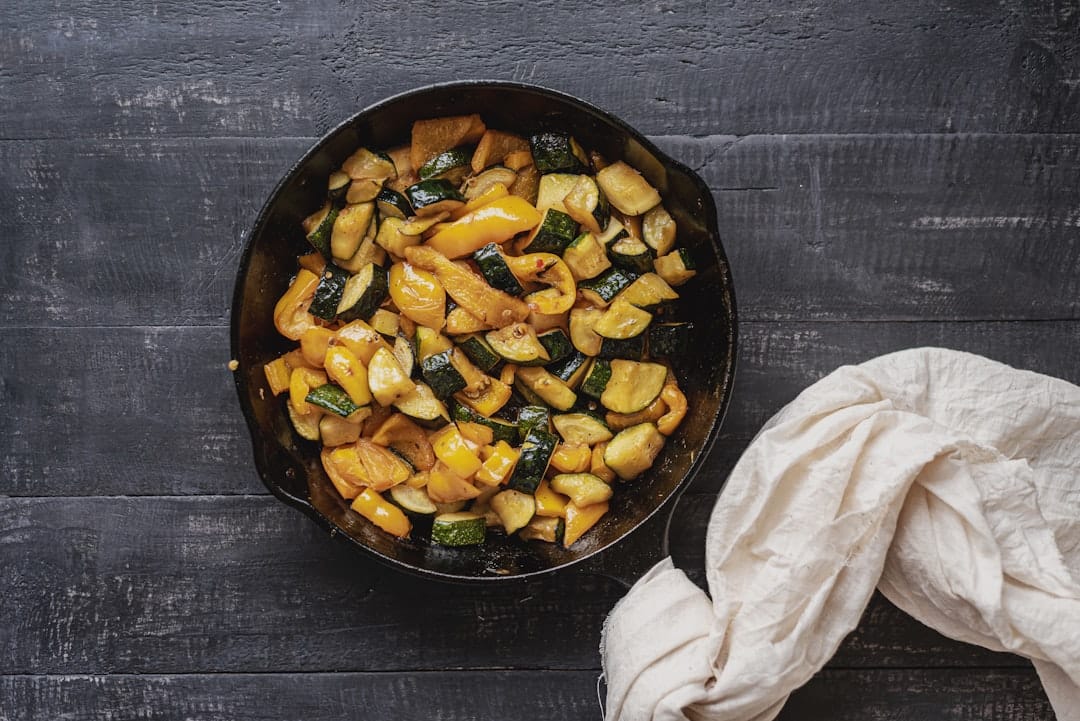
Sautéed Yellow Squash With Garlic
 Save
Because the flavor is so mild and creamy, yellow squash takes well to almost any treatment: roasted, pureed, grilled, or spiralized into ribbons in place of pasta. A simple garlic sauté is the easiest place to start. Wash the squash well under running water, slice it into rounds, and cook it in a hot pan with a little oil and minced garlic until the edges turn golden and tender. It’s a non-starchy vegetable with few dietary restrictions, which makes it an easy weeknight side.
Frequently Asked Questions
Can you eat yellow squash raw?
Yes. The skin and seeds are entirely edible, so it works sliced into salads or served with a dip, and it keeps its nutrition whether raw or cooked.
How is yellow squash different from zucchini?
Mostly shape and color. Yellow squash is one color and broader at the base with a shorter neck, while zucchini is typically long, even, and green. Nutritionally they’re close, and they swap well in recipes.
Is yellow squash good for weight loss?
It fits the bill well. It’s fat-free, low in calories, and high in fiber, so it helps you feel full while adding volume to a meal without many calories.
The Bottom Line
Yellow squash rarely gets top billing, but it earns its place. For very few calories you get fiber, water, and a solid dose of vitamins A, C, and K, plus anti-inflammatory compounds and nutrients that matter in pregnancy. Its gentle flavor means it disappears into stir-fries, roasts, and noodle swaps without fuss. Keep it stored properly, and it’s one of the simplest ways to add a little more color and nutrition to summer meals.
This article is for informational purposes only and is not a substitute for professional medical advice. Talk to your doctor or a registered dietitian before making significant changes to your diet, especially if you are pregnant or managing a health condition.