
The trick isn’t masking the stench. It’s breaking the sulfur compounds that cause it.
A perfect afternoon can turn sideways in a single second. One wrong step near a startled skunk and suddenly you, your dog, or your car reeks of something that no amount of wishful thinking will fix. The good news is that the smell isn’t permanent, and you don’t need anything exotic to handle it. You mostly need to move fast and reach for the right household ingredients.
What makes skunk spray so stubborn is chemistry, so the fix is chemistry too. Understanding that one idea makes the whole cleanup process much less frustrating.
Key Takeaways
– Skunk spray gets its punch from sulfur-based compounds called thiols and thioacetates, and it can travel roughly 3 meters.
– The smell doesn’t just linger, it can sting your eyes and turn your stomach, much like tear gas.
– Strongly scented soaps, dish detergent, and a baking soda soak can pull the odor off skin and hair.
– A mix of hydrogen peroxide, baking soda, and dish soap neutralizes the smell on pets, but never store or seal that mixture.
– Tomato juice is a myth; it only covers the smell for a while instead of breaking it down.
What Actually Makes Skunk Spray So Foul
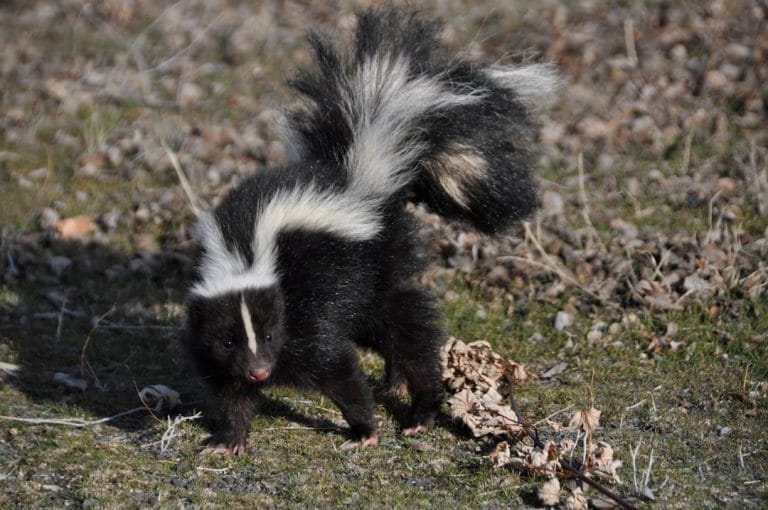
Skunk spray, sometimes called musk, is the striped skunk’s built-in alarm system. When the animal feels cornered or surprised, it releases a yellow, oily fluid from glands near its tail, and that spray can reach a target about 3 meters away. Unless you’re standing well back, dodging it is tough.
The reason it clings and reeks comes down to two families of sulfur compounds: thiols and thioacetates. Thiols carry that instantly recognizable stink. Thioacetates are sneakier. On their own they’re relatively quiet, but add water or humidity and they convert into fresh thiols, which is why the smell can seem to come roaring back after you thought it was fading. Researchers who studied the striped skunk even found specific culprits like (E)-2-butene-1-thiol in the secretion. The most effective way to defeat these molecules is to oxidize them, turning the sulfur into odorless sulfonic acids, which is exactly what the peroxide method below does.
The Effects Go Beyond the Smell
Getting sprayed is unpleasant in more ways than one. Studies suggest skunk spray behaves a lot like tear gas. If it reaches your eyes, they water almost immediately because the spray is a natural tear inducer. At higher concentrations it can bring on nausea, and in extreme cases it may be seriously toxic to people. Some folks also report headaches and trouble breathing after a close encounter.
None of that means you should panic. It does mean you shouldn’t dawdle. The faster you rinse and treat, the milder the aftermath tends to be.
How to Get Skunk Smell Off Your Skin and Hair
 Save
Before anything else, keep your hands away from your face and eyes. That single habit prevents you from spreading the irritating oil where it hurts most.
Then head straight for a bath. On your body, a strong dish detergent or a heavily fragranced soap works better than a gentle cleanser, because you want something that cuts oil. For your hair, reach for a shampoo formulated for oily hair, since the spray is greasy by nature and ordinary shampoo can slide right off it.
Baking soda is a helpful backup. In one study on odor from decomposing food waste, researchers found that a modest amount of baking soda cut the smell by roughly 70 percent, though piling on too much pushed the pH high enough to release ammonia. The lesson translates to your bathtub: use a sensible amount, not a mountain. To try it:
Add 3 to 4 cups of baking soda to a bucket and mix in hot water.
Rinse yourself with it, then repeat until the odor eases.
Follow with plain water to wash away any residue.
A commercial deodorizer is another reliable option if the soap-and-soda routine doesn’t fully do the job.
The Peroxide Formula for Pets
 Save
If your dog or cat took the hit, there’s a well-known recipe credited to chemist Paul Kerbaum that actually neutralizes the smell rather than hiding it. You’ll need:
1 quart of 3 percent hydrogen peroxide
¼ cup of baking soda
1 to 2 teaspoons of liquid dish detergent
Mix these in an open container and work the lather through your pet’s coat. Let it sit for about five minutes, then rinse. Repeat if the smell hasn’t lifted.
A few cautions matter here. Hydrogen peroxide can lighten fur, so five minutes is the ceiling, not a suggestion. Keep the lather far from your pet’s eyes, where it can cause harm. And this part is important: never seal the mixture in a closed container or save leftovers. The oxygen that peroxide releases can build pressure and make a sealed bottle burst, so mix only what you’ll use and toss the rest.
Skip the tomato juice, by the way. It’s the internet’s favorite skunk remedy and one of the least effective. Tomato juice has such a loud smell of its own that it briefly overpowers the skunk odor, but it never neutralizes the underlying compounds. Once it fades, the stench is still there.
Getting It Out of Clothes and Fabric
 Save
Fabric behaves differently depending on whether it can go in the wash.
For suits, dresses, shoes, and anything you can’t machine wash, hang them to air-dry in the shade first. Once dry, ask your local dry cleaner whether they can take it further.
For washable items, soak them in a bucket of hot water with laundry detergent and about ½ cup of baking soda for 30 minutes, then air-dry. Repeat until the smell is truly gone. Dedicated products such as Skunk-Off, Odormute, and Nature’s Miracle Skunk Odor Remover are worth keeping on hand for stubborn cases, and you can find them online or at larger stores. If a garment took a direct, heavy hit, be honest with yourself: some fabric holds the odor so long that replacing it is the kinder choice.
Clearing the Odor From Your Car
 Save
A sprayed car is its own project. Start by opening every window and letting the upholstery air out.
From there, wipe down the interior with a blend of water, hydrogen peroxide, and baby shampoo. For tougher spots, a solution of one part bleach to nine parts water can help, but bleach lightens fabric, so test a hidden patch first. Wash the exterior, tires included, with water and car-wash soap. If a trace of smell survives all that, fall back on an odor remover like Skunk-Off or Odormute. Some people also lean on essential oils, which carry a strong fragrance and have antimicrobial properties shown to counter certain odors.
Frequently Asked Questions
Does tomato juice really get rid of skunk smell?
No. It temporarily masks the odor with its own strong scent, but it doesn’t break down the sulfur compounds, so the smell returns as the juice wears off.
How soon do I need to act after getting sprayed?
As quickly as you can. The spray’s oils set in and the thioacetates keep converting to smelly thiols in the presence of moisture, so faster treatment means a better result.
Is skunk spray dangerous or just gross?
Mostly it’s miserable rather than harmful, but it can sting your eyes and cause nausea, and at high concentrations it may be toxic. Rinse promptly and keep it away from your eyes.
The Bottom Line
Skunk smell feels like a disaster in the moment, but it’s a solvable one. Because the odor comes from sulfur compounds, the winning moves are the ones that break those compounds down: peroxide-based mixes for pets, strong detergents and baking soda for your skin and clothes, air and targeted cleaners for your car. Act quickly, protect your eyes, and resist the tomato juice temptation. With the right approach, that lingering stench fades faster than you’d expect.
This article is for general informational purposes only and is not a substitute for professional medical or veterinary advice. If you or a pet experience severe eye irritation, difficulty breathing, or other concerning symptoms after exposure to skunk spray, contact a healthcare provider or veterinarian.