
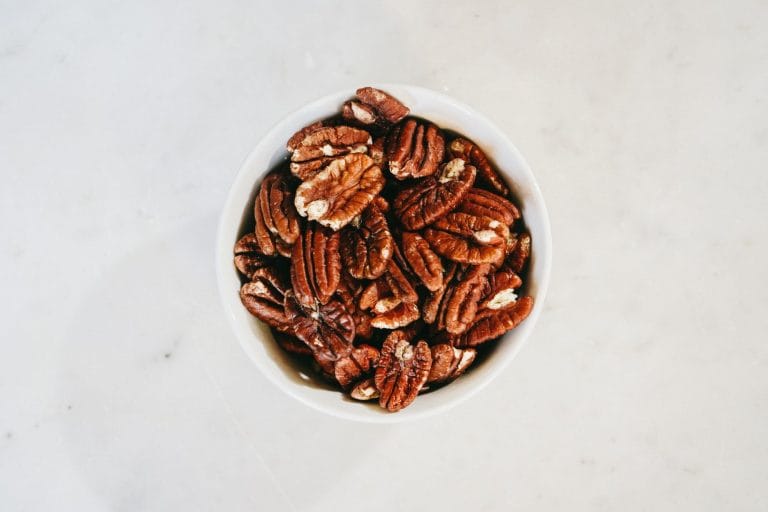
A sodium-free nut with a surprisingly long list of things it can do for your body.
Pecans have a reputation as a dessert ingredient, which sells them a little short. This buttery tree nut, native to North America, is naturally free of sodium and packed with unsaturated fats, fiber, antioxidants, and a long roster of minerals. Researchers have tied regular pecan eating to lower cholesterol, calmer blood sugar, and better cognitive function later in life.
The catch, if there is one, is that they are calorie-dense. A little goes a long way. Here is what the evidence actually shows, plus how many you can reasonably eat in a day.
Key Takeaways
– Pecans are sodium-free and rich in unsaturated fats, fiber, magnesium, copper, and zinc.
– Eating them regularly may lower LDL (“bad”) cholesterol and support heart health.
– Their fiber and antioxidants are linked to steadier blood sugar, better digestion, and sharper aging brains.
– They are calorie-dense, so a handful of about 15 to 16 pecans a day is a sensible ceiling.
– Anyone with a tree nut allergy should skip them entirely.
A Small Nut With a Big Nutrient Load
Pecans carry 19 different vitamins and minerals, which is a lot for something you can hold a dozen of in one palm. Per 100 grams, the USDA lists roughly 691 calories, close to 9.6 grams of fiber, 121 mg of magnesium, 4.5 mg of zinc, 1.2 mg of copper, and a solid dose of B vitamins including thiamin and niacin.
Copper and zinc do quiet but important work, supporting immune defense, thyroid function, metabolism, and skin repair. If you already keep other mineral-dense seeds in rotation, pecans slot in nicely alongside something like these tiny, mineral-packed seeds rather than replacing them.
What Pecans Do for Your Heart
 Save
This is where the research is strongest. Diets higher in tree nuts are consistently associated with a lower risk of heart disease, largely because they help push down LDL cholesterol and triglycerides. LDL is the type that builds up in artery walls and sets the stage for heart attacks.
One frequently cited study from New Mexico State University had participants eat 68 grams of pecans a day, roughly 38 nuts, and their LDL came out lower than a control group eating no nuts at all. That portion is generous on calories, so most people are better off with a smaller daily amount and the same fats doing their work over time.
The benefit comes down to what pecans are made of. They are rich in oleic acid, the same monounsaturated fat that makes pressed peanut oil a friendlier cooking fat for the heart, along with phenolic antioxidants and gamma-tocopherol, a form of vitamin E that may help keep arterial inflammation in check.
Steadier Blood Sugar and a Happier Gut
 Save
The fiber in pecans earns its keep twice over.
For blood sugar, fiber slows how quickly the intestine absorbs macronutrients and delays how fast the stomach empties, which softens the spikes that follow a meal. A single cup of pecans delivers about 10.5 grams of total dietary fiber. Work out of the University of Toronto found that people with diabetes who added nuts to their daily diet saw improvements in their blood glucose control.
Your gut benefits too. Pecans contain polyphenols called ellagitannins that act as prebiotics, feeding helpful bacteria such as Bifidobacterium and Lactobacillus. Combine that with the fiber’s effect on regularity and you get a nut that may ease constipation and lower the risk of some digestive complaints. The human research here is still thin, so treat this as promising rather than settled.
Keeping Your Brain Sharp as You Age
 Save
Pecans are one of the better food sources of gamma-tocopherol and ellagic acid, and both matter for the aging brain. Vitamin E works as an antioxidant that shields brain cells from the free-radical damage linked to dementia, while ellagic acid has been studied for slowing age-related cognitive decline. In one trial of middle-aged men, ellagic acid appeared to improve measures of cognition.
The monounsaturated fats help as well. A large University of South Australia study of nearly 5,000 adults aged 55 and over found that those eating about 10 grams of nuts a day were 40% less likely to score poorly on cognitive tests. That is an association, not proof, but it points in a consistent direction.
Antioxidants, Inflammation, and Cancer Risk
Oxidative damage sits behind a range of chronic problems, from heart disease to Alzheimer’s, and pecans push back with compounds like ellagic acid. Loma Linda University researchers found that the antioxidant capacity of pecans helped reduce LDL oxidation in people, which is part of how they protect the heart.
Those same polyphenols, including tannins, appear to quiet the genes that drive chronic inflammation, and the magnesium in pecans may calm inflammation in artery walls. On the cancer side, laboratory work suggests pecan kernel extracts have cell-protective and anti-proliferative effects, and dietary fiber and oleic acid have each been linked, separately, to lower risk of colon and breast cancer. For a bigger antioxidant picture, pecans keep good company with foods like raw cacao and its plant compounds.
Skin, Hair, and Appetite
A few smaller perks round things out. The vitamins A and E in pecans help neutralize the free radicals behind premature skin aging, and vitamin A supports healing and fewer breakouts. The amino acids and iron in pecans are thought to encourage circulation to the hair follicles, which may help with shedding, though plant iron is absorbed less readily than the iron in meat, so you need more of it.
For weight, fiber is the quiet helper again. It boosts fullness, steadies appetite, and nudges metabolism, while the B vitamins in pecans keep energy metabolism ticking. None of that makes pecans a weight-loss food on their own, but a small portion can make a snack more satisfying.
Easy Ways to Add Them to Meals
 Save
You do not need a recipe to enjoy them, but a couple of ideas help. Fold chopped raw pecans into a quick quinoa pancake batter made with eggs, a little baking powder, vanilla, and cinnamon, then scatter more on top. For something savory, bake mounds of grated parmesan into crisps and press a pecan half into each before they set. A small handful over yogurt or a salad works just as well.
Keep the portion in mind. Because pecans are so calorie-dense, sticking to around 15 to 16 nuts a day gives you the benefits without the excess.
Frequently Asked Questions
How many pecans should I eat in a day?
A handful of roughly 15 to 16 pecans is a reasonable daily amount for most people. Research showing cholesterol benefits used larger servings, but those come with a lot of calories, so a smaller portion is easier to sustain.
Are pecans safe if I have a nut allergy?
No. Pecans are tree nuts and can trigger serious allergic reactions in sensitive people. If you have a known nut allergy, avoid them completely and read ingredient labels carefully.
Are raw pecans better than roasted ones?
Raw pecans keep their fats and antioxidants intact and carry no added salt or oil. Roasted, salted versions taste great but can add sodium and calories, so plain raw or dry-roasted nuts are the better everyday choice.
The Bottom Line
Pecans punch above their size. They bring unsaturated fats, fiber, antioxidants, and a deep bench of minerals to the table, and the evidence connecting them to lower cholesterol, steadier blood sugar, and better cognitive aging is genuinely encouraging. They are calorie-dense, so portion control matters, and they are off-limits for anyone with a nut allergy. Beyond that, a small daily handful is an easy, sodium-free upgrade to almost any snack.
This article is for informational purposes only and is not a substitute for professional medical advice. Talk to your doctor or a registered dietitian before making significant changes to your diet, especially if you have a health condition or take medication.