
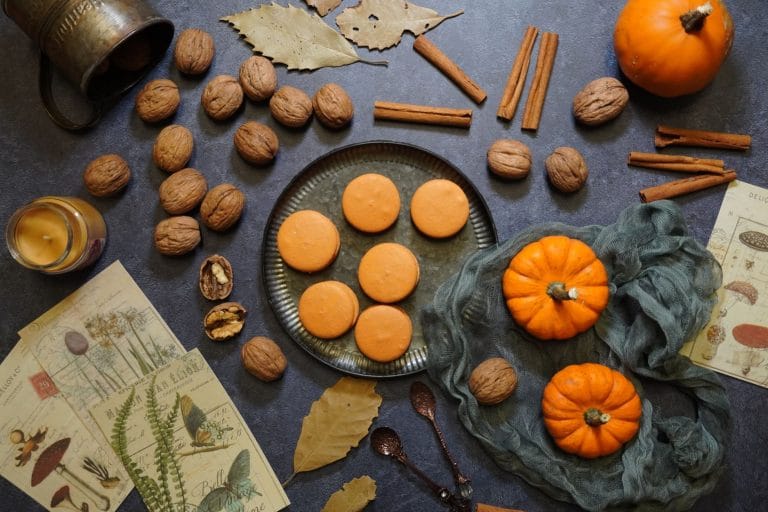
A soft spiced cookie with a cold cheesecake centre, and the one step that stops it leaking everywhere.
Stuffed cookies fail in a predictable way. The filling is warmer and looser than the dough, so as the cookie spreads the centre finds the nearest weak point and runs out onto the tray. You get a flat cookie with a burnt puddle attached. Everything below is arranged around preventing that.
The fix is unglamorous: you freeze the filling solid before it ever meets the dough. That single step is the difference between a neat cheesecake centre and a mess. The rest is a straightforward spiced pumpkin cookie, with pumpkin butter doing the flavour work that plain puree cannot.
Key Takeaways
– Freeze the cheesecake filling into discs for at least two hours before assembling. This is not optional.
– Pumpkin butter is concentrated and spiced, so it delivers flavour without the excess water that makes puree-based cookies cakey.
– Blot the pumpkin butter if it looks wet, since moisture is what turns these from chewy into soft and bready.
– Chill the assembled dough balls again before baking for a thicker cookie.
– They keep three days at room temperature and freeze well, baked or unbaked.
What Pumpkin Butter Brings
 Save
SavePumpkin butter is pumpkin puree cooked down with sugar, spice, and usually a little apple juice or cider until it is thick and spreadable. There is no dairy in it, despite the name. The cooking drives off a large part of the water and concentrates everything left behind.
That concentration is exactly why it works better than puree in a cookie. Plain canned pumpkin is around 90 per cent water, and water in cookie dough means steam, and steam means a cakey, muffin-textured result. Pumpkin butter gives you the same flavour with a fraction of the liquid.
Nutritionally, pumpkin itself is a reasonable source of carotenoids, the pigments responsible for its colour, and there is a research literature examining the phytochemicals in the flesh, peel, and seeds. That is a genuine feature of the vegetable. It is also fair to say that by the time it is cooked with sugar into a butter and folded into a cookie dough, you are eating a biscuit, and it should be judged as one.
What You Need
 Save
SaveMakes about 16 cookies.
Cheesecake filling
200g full-fat cream cheese, at room temperature
40g icing sugar
1/2 teaspoon vanilla extract
Cookie dough
170g unsalted butter, softened
150g light brown sugar
100g caster sugar
1 large egg
120g pumpkin butter
1 teaspoon vanilla extract
320g plain flour
1 teaspoon bicarbonate of soda
1/2 teaspoon fine salt
2 teaspoons ground cinnamon
1/2 teaspoon ground ginger
1/4 teaspoon ground nutmeg
To finish
3 tablespoons caster sugar mixed with 1 teaspoon ground cinnamon
Use full-fat block cream cheese, not the spreadable tub kind. The tubs contain more water and stabilisers, and they will not freeze into a firm disc.
How to Make Them
 Save
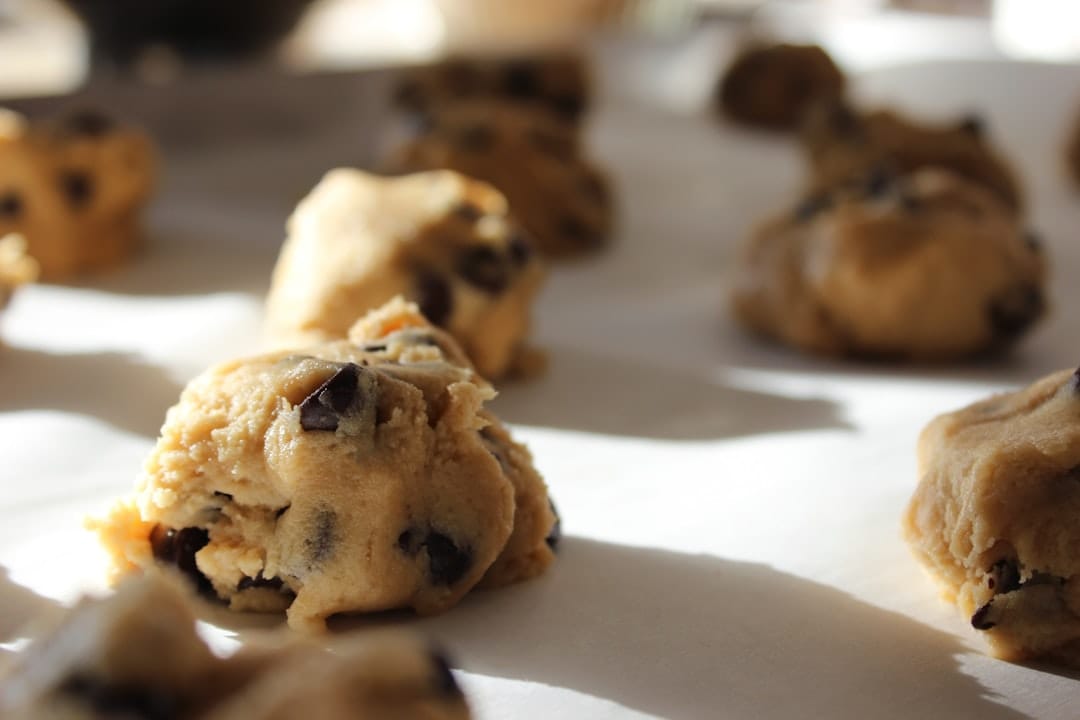
Save1. Beat the cream cheese, icing sugar, and vanilla until smooth. Drop 16 rounded teaspoons onto a lined tray, flatten each slightly into a disc, and freeze for at least 2 hours until solid.
2. Cream the butter with both sugars for 3 minutes until pale and light. Beat in the egg, then the pumpkin butter and vanilla. If the mixture looks split at this stage, keep going, it will come together.
3. Whisk the flour, bicarbonate of soda, salt, and spices together, then fold into the wet mixture until just combined.
4. Chill the dough for 30 minutes. It is soft and will be unworkable otherwise.
5. Take about 2 tablespoons of dough, flatten it in your palm, place a frozen cheesecake disc in the centre, and wrap the dough up and around it. Seal the seam completely, then roll into a ball. Any gap is where the filling will escape.
6. Roll each ball in the cinnamon sugar and place on a lined tray, well spaced.
7. Freeze the assembled balls for 15 minutes while the oven heats to 180C (350F).
8. Bake for 12 to 14 minutes, until the edges are set and the centres still look slightly underdone.
9. Leave on the tray for 10 minutes before moving them. They are extremely fragile straight from the oven.
If your pumpkin butter is on the loose side, spread it on kitchen paper for a few minutes first. It is the single most common reason these come out cakey.
Storing Them Properly
 Save
SaveBecause of the cream cheese, these are not a cookie you leave in a jar on the counter for a week. Three days in an airtight container at room temperature is the sensible limit, and if your kitchen is warm, refrigerate them instead, where they hold for a week.
They are much better slightly warm. Ten seconds in a microwave brings the centre back to something close to fresh.
For freezing, you have two options and the second is better. You can freeze the baked cookies for up to three months and thaw at room temperature. Or you can freeze the assembled, unbaked, cinnamon-sugared balls on a tray, transfer them to a bag once solid, and bake straight from frozen with three extra minutes. That way you get genuinely fresh cookies whenever you want them, which is the whole point.
The Bottom Line
These are a project cookie, but not a difficult one, and the technique transfers to any stuffed cookie you make afterwards. Freeze the filling hard, seal the dough completely around it, use pumpkin butter rather than puree, and pull them from the oven while the centres still look soft. Everything else is spice and patience.
This article is for informational purposes only and is not a substitute for professional medical advice. Talk to your doctor or a registered dietitian before making significant changes to your diet, especially if you have a health condition or a known food allergy.