
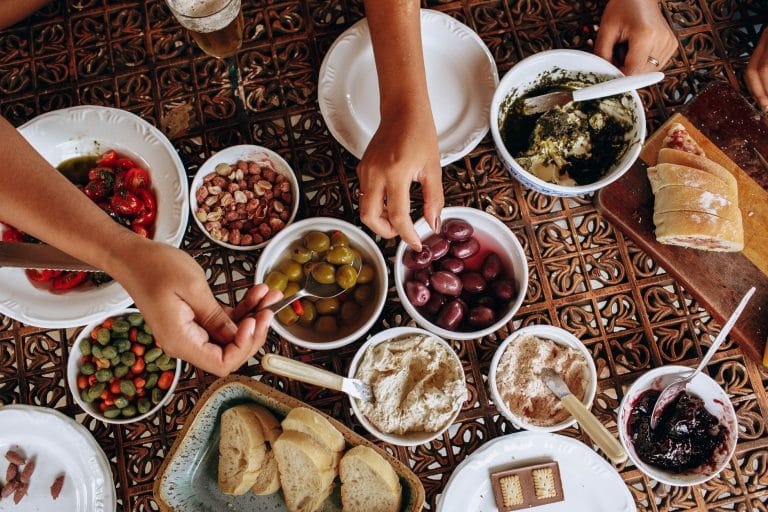
A way of eating built around olive oil, fish, and vegetables that people actually stay on.
Most weight loss plans ask you to give something up. The Mediterranean diet mostly asks you to add: more vegetables, more olive oil, more beans and fish and herbs. Weight loss happens as a side effect of eating this way, not as the point of it. That framing sounds soft, and it is part of why people underestimate the approach.
It draws on the traditional eating patterns of Greece, Spain, and southern Italy, which is why it feels less like a protocol and more like a cuisine. Research has linked it to better heart health, lower inflammation, sharper cognition, and steadier blood sugar (1). The weight loss is real, but it arrives on a slower timeline than the diet industry has trained us to expect.
Key Takeaways
– The Mediterranean diet centers whole foods: produce, healthy fats, whole grains, legumes, and lean protein, with red and processed meat kept occasional.
– In head-to-head trials it has outperformed low-fat diets for weight loss and matched low-carb diets while doing better on blood sugar control.
– The mechanism is satiety, not restriction. Fiber, fat, and protein together make it hard to overeat without counting anything.
– It works best as a permanent shift paired with regular movement and reasonable portions.
– Some people should check with a clinician first, including those who are pregnant or breastfeeding and anyone managing Crohn’s disease or IBD.
Does the Research Actually Support Weight Loss?
Short answer: yes, though the numbers are modest and honest about it.
A study published in The New England Journal of Medicine followed people eating a Mediterranean diet supplemented with either extra-virgin olive oil or mixed nuts. Both groups had a lower risk of obesity and were more likely to lose weight than the low-fat comparison group (2). That result surprised a lot of people at the time, because the Mediterranean arms were eating considerably more fat.
A separate trial pitted three approaches against each other: low-fat, low-carb, and Mediterranean. Both the low-carb and Mediterranean groups lost weight, but the Mediterranean group also came out ahead on blood sugar control. The average loss was 4.4 kg on the Mediterranean diet versus 2.9 kg on the low-fat plan (3).
Older adults in Spain who stuck with the pattern saw reductions in both body weight and waist circumference, and, maybe more usefully, they avoided the slow weight gain that tends to creep in with age (4).
There is even data from a surgical context. Among patients recovering from endoscopic bariatric therapy, those following a Mediterranean diet had lost 14.2% more weight at six months than those on a protein-focused diet (5). Pairing medical treatment with this style of eating seems to compound the benefit.
Systematic reviews and meta-analyses have found the same association repeatedly: the longer people adhere, the better the weight outcomes (6, 7, 8, 9). Adherence is the whole game. A Mediterranean diet you abandon in March does nothing.
Why It Works Without a Calorie App
 Save
SaveNothing about this diet is magic. It just stacks several satiety levers at once.
Vegetables and fruit arrive in volume, bringing fiber, water, vitamins, and minerals. They fill you up on relatively few calories, which is the quiet engine behind most successful weight management (7).
Whole grains such as oats, brown rice, bulgur, and farro release energy gradually instead of spiking blood sugar (13). Steadier energy means fewer of the 3 p.m. cravings that derail an otherwise good day (14).
Protein comes mostly from fish, poultry, and legumes. These are lower in saturated fat and still supply the amino acids you need to hold onto muscle while losing fat (12). If you would rather lean plant-forward, a “green” Mediterranean variation swaps in plant proteins.
Then there are the herbs. Basil, oregano, thyme, garlic, cumin, mint, dill, parsley, bay leaf. They do real work, carrying flavor that would otherwise come from salt or sugar. It is a small thing that makes the food good enough to keep eating.
Moderation still applies. Red and processed meats are limited, since they run high in saturated fat and contribute to weight gain in quantity (7). Limited is not banned, though. Nobody has to give up a Sunday roast forever.
Olive Oil, Nuts, and the Fat Question
 Save
SaveThis is the part that trips people up, especially anyone who came of age during the low-fat era.
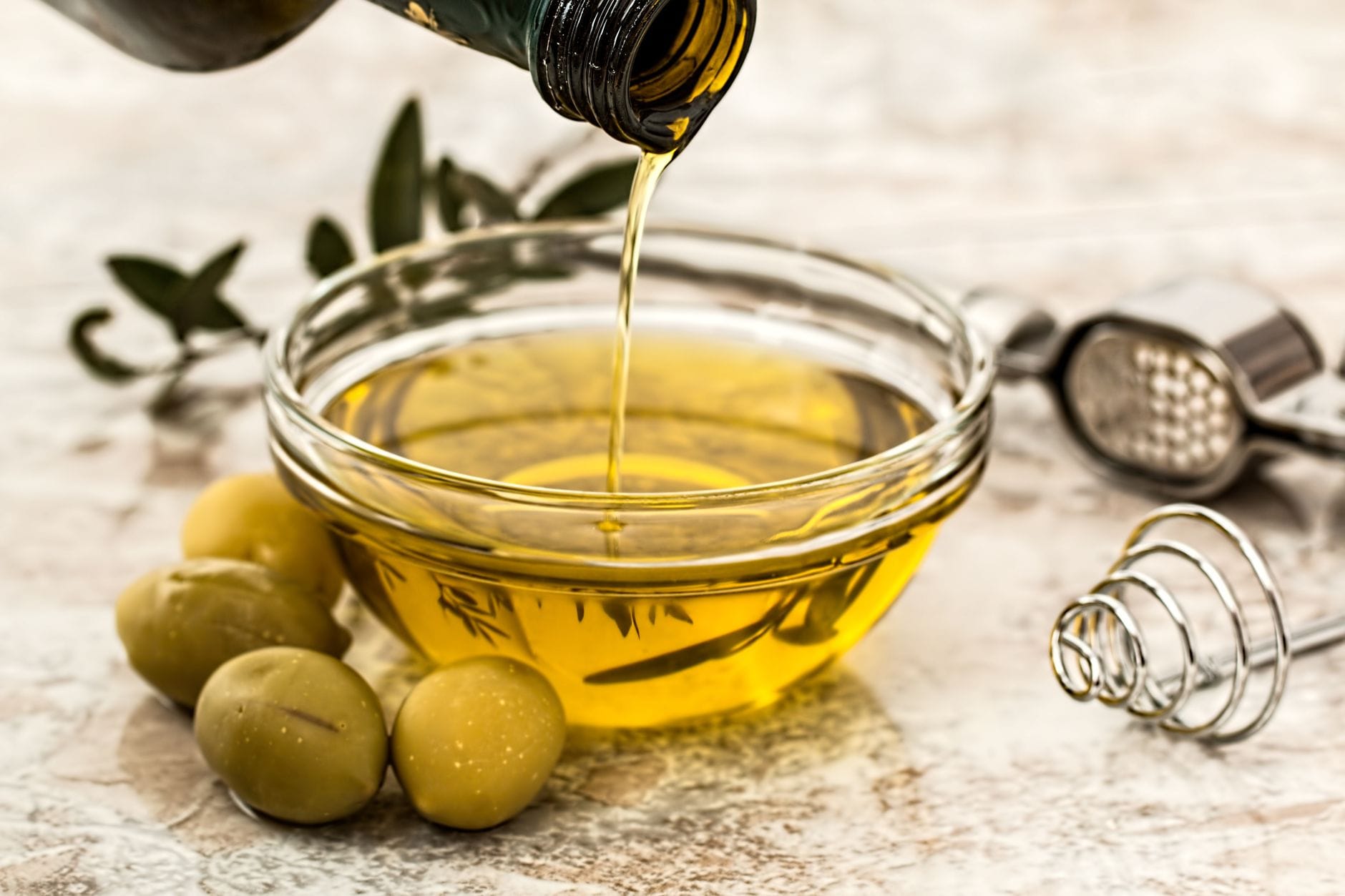
Extra-virgin olive oil, almonds, walnuts, flaxseeds, chia seeds, and fatty fish like salmon, trout, and mackerel are not merely tolerated on this diet. They are structural. The fats are satiating, they support heart health (2), and they displace the saturated fats hiding in processed food, which in practice lowers total calorie intake and body fat rather than raising it (10, 11).
Eating fat while losing fat feels wrong until you have done it for a month. Then the logic clicks: a salad dressed in real olive oil holds you until dinner, and a dry one doesn’t.
About the wine
 Save
SaveModerate red wine is a traditional feature of the pattern, and its antioxidants may support heart health (15). If you drink, keep it to roughly one glass a day for women and up to two for men. If you don’t drink, there is no reason to start for this.
What a Week of Eating Looks Like
 Save
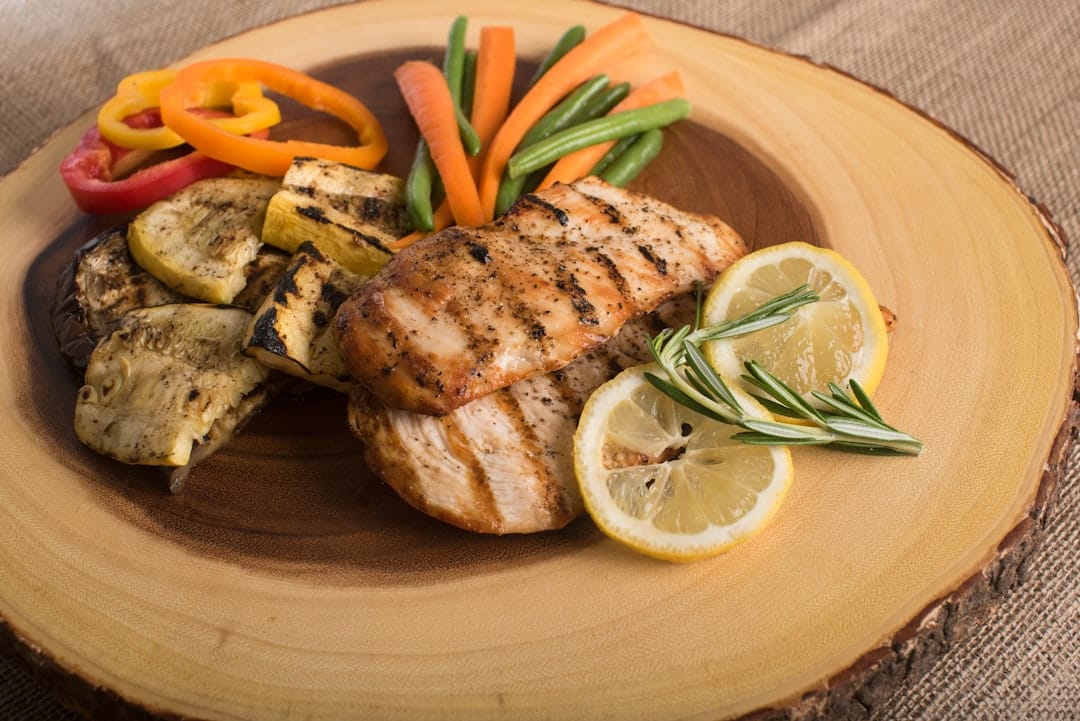
SaveYou don’t need a rigid seven-day chart. Build plates from these groups and the week takes care of itself.
Fruit — berries, apples, pears, peaches, grapes, cherries, citrus
Vegetables — spinach, kale, celery, zucchini, tomatoes, bell peppers, eggplant, asparagus
Fats — extra-virgin olive oil, almonds, walnuts, flaxseeds, chia seeds
Fish — salmon, trout, mackerel
Lean protein — chicken, turkey, lentils, chickpeas
Whole grains — wheat, brown rice, bulgur, barley, buckwheat, farro, freekeh, oats
Legumes — beans, lentils, peas
Dairy — low-fat yogurt and cheese, in modest amounts
For drinks, water does most of the work. Herbal teas fill the gaps nicely: chamomile in the evening, mint after a heavy meal, hibiscus cold in summer.
A realistic day might be yogurt with berries and walnuts in the morning, a lentil and tomato salad with plenty of olive oil at lunch, and grilled salmon over farro with roasted zucchini at night. None of that feels like dieting, which is the entire point.
Who Should Think Twice
The Mediterranean diet is broadly safe and designed for the long haul rather than a six-week sprint. It suits people managing heart disease, high blood pressure, depression, or dementia risk, and it aims squarely at blood sugar regulation and lower type 2 diabetes risk.
A few caveats are worth taking seriously. Pregnant and breastfeeding people should talk to their clinician before making a large dietary shift. So should anyone with a gastrointestinal condition like Crohn’s disease or inflammatory bowel disease. And because the pattern leans on plant proteins over red meat, iron deficiency is a possible downside worth monitoring, particularly if you already run low.
None of this makes the diet a bad fit. It just means a conversation first.
Frequently Asked Questions
How fast will I lose weight on the Mediterranean diet?
Slower than you probably want. Trial averages land in the range of a few kilograms over months, not weeks. The trade is that the loss tends to stay gone, because the eating pattern is one people can actually maintain for years.
Is it still effective without wine?
Yes. Wine is a cultural feature of the pattern, not a mechanism of weight loss. The heavy lifting is done by vegetables, olive oil, fish, legumes, and whole grains. Skip the alcohol and the diet works fine.
Do I have to count calories?
Not usually. The combination of fiber, healthy fat, and lean protein tends to regulate intake on its own. That said, portion control still matters, especially with calorie-dense foods like olive oil, nuts, and cheese. Pairing the diet with regular physical activity makes a noticeable difference too.
The Bottom Line
The Mediterranean diet is not a quick fix, and anyone selling it that way is overselling. What the evidence shows is steadier: better weight outcomes than low-fat diets, comparable results to low-carb with a blood sugar advantage, and benefits that grow with how long you stay with it. It works because the food is worth eating, so people keep eating it.
Start with one swap. Olive oil instead of butter, fish more often than you eat it now, beans in place of one meat meal. Add movement and reasonable portions, and give it months instead of weeks. That is an unglamorous prescription, but it is the one the research supports.
This article is for informational purposes only and is not a substitute for professional medical advice, diagnosis, or treatment. Always consult a qualified healthcare provider before making significant changes to your diet, especially if you are pregnant, breastfeeding, managing a chronic condition, or taking medication.